
Wailea Was Always a Resort, Never a Neighborhood
Why we oppose Wailea’s inclusion in Bill 9 and what we’d like visitors and locals to understand about Wailea’s history.
We understand why Maui County is trying to deliver local housing at more affordable price points with Bill 9. It’s something 99% of counties across the country aspire to achieve and government of course has a vital role to play in making it happen. Without a doubt, some condo complexes in Kihei and Lahaina have indeed evolved from housing locals to serving mainly vacation renters. With every unit of housing that flipped, locals found it harder and more expensive to find a place to live. That’s a real burden and a loss for Maui and it’s vibrant local neighborhoods. This is the sentiment on which Bill 9 rode to passage in December 2025.
The problem is that Maui County’s history of being lazy and careless with its own zoning code, means that resort areas like Wailea and Kapalua got caught in the Bill 9 crossfire. Clearly, Wailea is a different place with a different history, and applying the same solution here doesn’t create a single new unit of local housing at an affordable price point. Locals never lived here in the first place. There was no Main Street, no local elementary school, no corner market. It was just scrubland. When it comes to Wailea, Bill 9 creates a slew of new problems and represents a serious breach of trust between the County, the Wailea Community Association, and existing condo owners who paid their dues and taxes diligently for decades.
As a result of Bill 9’s overreach and the County’s ongoing refusal to proceed with the related Temporary Investigative Group (TIG) recommendations, visitors to Wailea will be left with fewer more expensive lodging options once the STR phase-out takes hold in 2031. The high-end resort hotels will be happy, but the County will lose precious tax revenue as many STR condos will be sold to off-island buyers who can afford to let them sit empty most of the year. Long-term market rents simply do not align to the cost structure of a Wailea condo. That’s a fail for both Maui County and any visitor who can’t afford $10,000 for a one-week stay at the Grand Wailea.
Here’s the truth about Wailea…

What Wailea Is, and How It Got Here
Wailea sits on a 1,500-acre stretch of South Maui’s dry leeward coast. Before it was a resort, it was rocky scrubland. Ancient Hawaiians farmed the cooler, fertile slopes of Haleakalā above it and came down to the shore to fish seasonally. They didn’t settle the arid, lava-strewn coastline permanently. After Hawaii’s land privatization in the 1800s, the area became cattle ranching territory. During World War II, the U.S. Marines used what is now Ulua Beach as an amphibious assault training ground. They called it “Little Tarawa” and trained here in part because no one lived nearby.
In 1957, Matson Navigation Company, a mainland firm that also operated hotels in Waikiki, bought the entire stretch of land. Nobody was displaced. No families were moved out. Matson purchased uninhabited scrubland.
It sat untouched for another decade. Then Alexander & Baldwin, a major Hawaiʻi land company, took over and partnered with an insurance company to build something new from scratch. In 1971, with full Maui County approval, they launched a master-planned resort project. The County worked alongside the developer to design the full scope of development with hotels along the beachfront, condominiums for individual ownership, golf courses, commercial areas, and a publicly accessible coastal path.
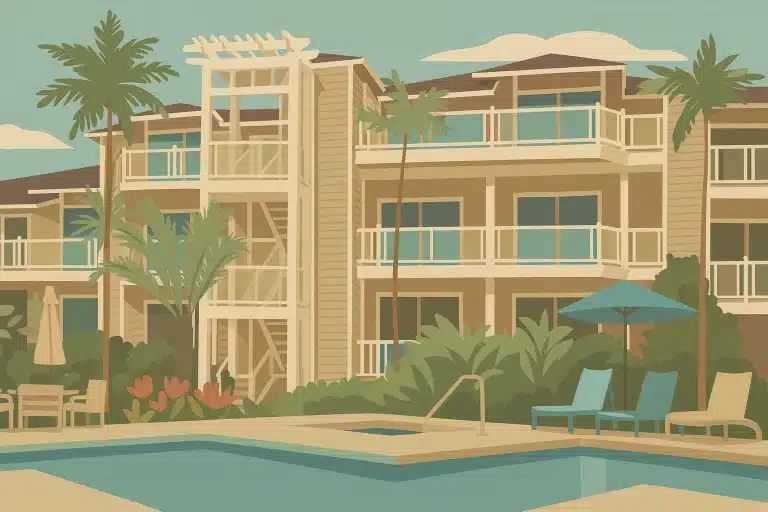
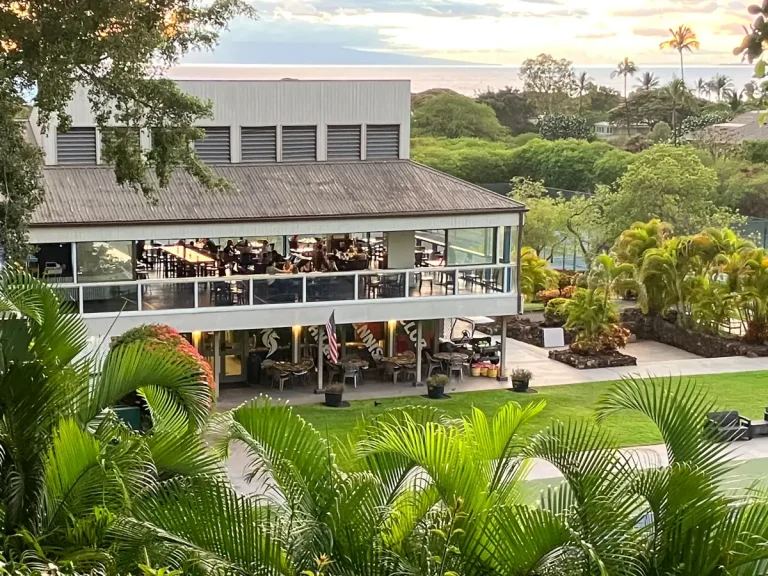
The first condominiums, Wailea Ekahi Village in 1978 and Wailea Ekolu Village in 1979, were designed from the ground up as resort units with pool pavilions, concierge services, access to the golf and tennis clubs, and ocean and golf course views. Not a lot of storage. Not a lot of parking. These units were vacation-oriented by design, approved as such by the County, marketed and sold to off-island investors, and then rented to visitors from day one.
No pre-existing residential apartments were converted to vacation rentals anywhere in Wailea. These complexes were purpose-built and designed for vacation rental use. They were built as part of a resort master plan, on land that was never a neighborhood, for a purpose the County actively encouraged and approved. At the time these condo projects were constructed, Maui’s Apartment District (A-1 and A-2) zoning designations explicitly included rights to operate condos as transient vacation rentals. Only later did Maui County strip STR rights from the A-1 and A-2 zoning designations.
Wailea’s Mix of Lodging: Why It Matters
One of the things that makes Wailea work, for visitors, for the local economy, and for the larger Maui community, is that Wailea isn’t just one thing.
At the top of the market you have Wailea’s iconic full-service luxury hotels: the Grand Wailea (now a Waldorf Astoria), the Four Seasons, the Fairmont Kea Lani, the Andaz, the Marriott Wailea Beach Resort. These are extraordinary places. They’re also, for most American families, a significant financial stretch, especially for anything beyond a short weekend. A week at one of these properties in high season can run $1,000 to $2,000 per night or more, before resort fees, before dining, before any activities, and on top of plane tickets.
Then there are the vacation rental condominiums: properties like Grand Champions, Wailea Ekahi, Wailea Ekolu, and Palms at Wailea. These are individually owned, well-maintained resort condos with full kitchens, living areas, laundry, and multiple bedrooms. A family visiting for a full week can cook breakfast in the morning, do laundry in the evening, spread out comfortably, and still walk to the same beaches the hotel guests are using. And they can do all this for less than half the cost of staying at a Wailea hotel. That’s not a consolation prize. For a lot of families, it’s the difference between making the trip to Maui or simply staying home.
And then there’s a third tier: a few scattered long-term rentals and some residential villa communities where owners live full-time or seasonally. None of these units are “affordable” in the way Bill 9 seeks to deliver, but they do serve to ground Wailea with a small and stable local population that persists amidst the constant coming and going of all the tourists.
This layered ecosystem serves different kinds of travelers, different budgets, and different travel styles. It makes Wailea more accessible to more people without cheapening what makes it special. Families come and stay longer in the vacation rental condos. Couples on anniversary trips book the Four Seasons. A few retirees who’ve fallen in love with the place buy their own unit and figure out how to spend as much time as possible in Wailea. All of these people contribute to the local economy, including restaurants, bars, shops, activity operators, cleaning crews, and the broader Maui tourism ecosystem.
Eliminate the vacation rental condo tier and you don’t replace it with local housing. You replace it with empty units that sit dark for most of the year, owned by people who can afford to leave them empty. The visitors who relied on that middle tier either go to Mexico instead or stay home. The economic activity they generated disappears and the local workforce that benefits from the economic activity, like waiters, housekeepers, maintenance workers, and tour operators all pay the price.
The Commitments We’ve Made, and Kept
Strangely, the Bill 9 debate never seemed to touch on the fact that when the County approved Wailea’s Planned Unit Development plan in 1971, that arrangement came with conditions. The developer, and ultimately the individual property owners who followed, agreed to take on public responsibilities that would normally fall to Maui County. They did this only in the context of Maui County agreeing to grant certain development rights that were clearly enumerated at the time and included transient vacation rental uses.
Roads. Parks. Landscaping. Security. Beach access. The county didn’t have to build or maintain these in Wailea. The developers and private owners did, through a governing association that is designed to hold and execute these obligations in perpetuity.
The Wailea Community Association, established in 1987, is what that commitment looks like in practice. Every year, without fanfare, the WCA maintains:
Walk the Coastal Walk on any given morning and you’ll see Maui residents jogging, local families setting up on the beach, and visitors heading over from hotels and condos alike. It’s a genuinely public resource and it exists, in part, because the owners of Wailea’s vacation rental condos pay the WCA assessments that keep it maintained.
These condo owners have kept this commitment for nearly 40 years. They’ve paid their general excise taxes (GET), transient accommodations taxes (TAT), separate property taxes (at elevated rates 5x what locals pay), and their WCA assessments, consistently and without interruption. That’s a track record of partnership and follow-through that the County is now trampling on when it fails to exempt Wailea from the consequences of Bill 9.
What Bill 9 Does, and Doesn’t Do, in Wailea
Maui County’s Bill 9, signed in December 2025, sets a deadline for vacation rentals in apartment-zoned condominiums to stop operating: January 1, 2031 for South Maui, including Wailea.
When a vacation rental condo at Grand Champions or Wailea Ekahi stops renting short-term, it does not become available to a Maui family at an affordable rent. It doesn’t work that way. These units sell for well over $1M in most cases. Most of these owners cover their costs (mortgage, HOA fees, WCA assessments, property taxes) solely on the basis of the transient rental income the unit generates. Without short-term rental income, most owners will sell instead of transition to long-term rental activity.
Why? Because there are plenty of off-island buyers looking for second homes that don’t come with the extra hassle of having to tolerate tourists wandering around the property. The impacted Wailea condo complexes are prime pied-à-terre set ups that have more appeal, not less, when STR uses are banned. This is the sad irony of the County’s failure to exempt resort areas like Wailea and Kapalua from Bill 9’s dragnet. For evidence, look no further than other similar properties in Wailea that were built after 1989, without STR rights, like The Palms at Wailea Phase II. They are by no means affordable (on a purchase or rental basis) and they often price out higher (not lower) than a nearly identical Wailea condo that does allow short-term rentals.
Maui County’s own economic consultants at UHERO noted this dynamic: eliminating STRs doesn’t automatically create affordable housing, because the math simply doesn’t allow owners to price their units for local affordability. In a market like Wailea, where unit prices reflect decades of resort-area appreciation, the gap between what units cost to own and what local families can afford is simply too large for a zoning change to bridge. You can’t legislate away math’s cold and uncaring truths.
🏝️ Host Insider Tip
Booking a Wailea condo for any dates through 2030? Those stays are on solid legal ground under Bill 9. We’re watching the rezoning process closely and will post updates on this page as the situation develops.
What We’d Like to See Instead
Maui County’s own TIG, the body convened specifically to study Bill 9’s impacts, recommended that Wailea’s vacation rental condos be rezoned to a new hotel classification that would preserve their legal operating rights permanently. The County’s own Planning Commission also recommended exempting resort areas including Wailea from Bill 9’s reach. These recommendations weren’t made by property owners lobbying for their own interests. They were made by people appointed to give the County Council an honest assessment. And yet the County still can’t figure out how to actually get it done.
Either exempt Wailea’s resort condominiums from Bill 9 outright, or move quickly on the rezoning process the TIG recommended. Either approach correctly reflects what Wailea is, what it has always been, and the commitments the County made when it approved all of this in the first place.
We’d also like visitors who love Wailea to know what’s at stake. If you’ve ever stayed in a vacation rental condo here; made breakfast with your family, grilled your own food poolside, spread out in a real living room after a long day at the beach, or watched the sunset from the lanai, you should know this option may not exist at an affordable price point after 2030. Unless something changes.
Wailea was built for visitors and is an economic engine that powers businesses across Maui. We should maintain the full diversity of lodging options to help ensure that middle-class vacationers can continue to experience this well-designed and beautifully maintained corner of Maui.
Yes, completely. Vacation rentals in Wailea’s apartment-zoned resort condominiums, including Grand Champions, Wailea Ekahi, Wailea Ekolu, and Palms at Wailea, are fully legal and operating normally. Maui County’s Bill 9 sets a future deadline of January 1, 2031 for South Maui. Nothing has changed today, and the County may still consider rezoning options that could preserve these rights permanently.
Bill 9 is a Maui County ordinance signed in December 2025 that phases out short-term vacation rental use in apartment-zoned condominium buildings. Its stated goal is to convert vacation rental units into long-term housing for local residents, irrespective of actual affordability. It sets different deadlines by area: January 1, 2029 for West Maui and January 1, 2031 for South Maui, including Wailea. Hotel-zoned properties are not impacted.
The Minatoya List is a County-recognized group of apartment-zoned condominium complexes that have been legally operating as vacation rentals since before 1989, when Maui County changed its zoning rules. Named after the county attorney who issued the original legal opinion clarifying their status, these properties have continued to exercise their short-term rental rights ever since. These are rights the County formally wrote into law in 2014. Bill 9 proposes to phase out those rights by 2031.
Not necessarily. The County’s own Temporary Investigative Group recommended rezoning Wailea’s resort condominiums to a new hotel classification that would preserve their short-term rental rights permanently. That rezoning process is separate from Bill 9 but appears stalled. We’re watching it closely and will post updates here as the situation develops. In the meantime, bookings through 2030 are on solid legal ground.
No. The land Wailea was built on was uninhabited coastal scrubland when development began in 1971. Ancient Hawaiians used the shoreline seasonally for fishing but didn’t settle the arid coastal strip permanently as their communities were on the cooler, more fertile slopes of Haleakalā above. By the time Matson Navigation Company purchased the land in 1957, it had been cattle ranching territory and then vacant land for decades. No families, Hawaiian or otherwise, were displaced to build Wailea.
The experience is different in so many ways, including price! Wailea’s vacation rental condos, like the ones at Grand Champions or Wailea Ekahi, are individually owned units with full kitchens, separate living and sleeping areas, private lanais, and in-unit laundry. They’re a better fit for families, longer stays, or anyone who wants to cook some meals, spread out a bit, and really settle in. Wailea’s hotels are extraordinary, but they’re a different product at a different price point. The two options serve different travelers, and having both is part of what makes Wailea accessible to a wide range of visitors.
This post reflects our editorial opinion on Maui County’s Bill 9 and its application to the Wailea resort area.
Stay in Wailea, Book Direct
Grand Champions #4: Two king suites, two pools with hot tubs, and easy access to Maui’s best beaches: Wailea, Ulua, Mokapu, and more. Get our best rates and no platform fees when you book with us.